
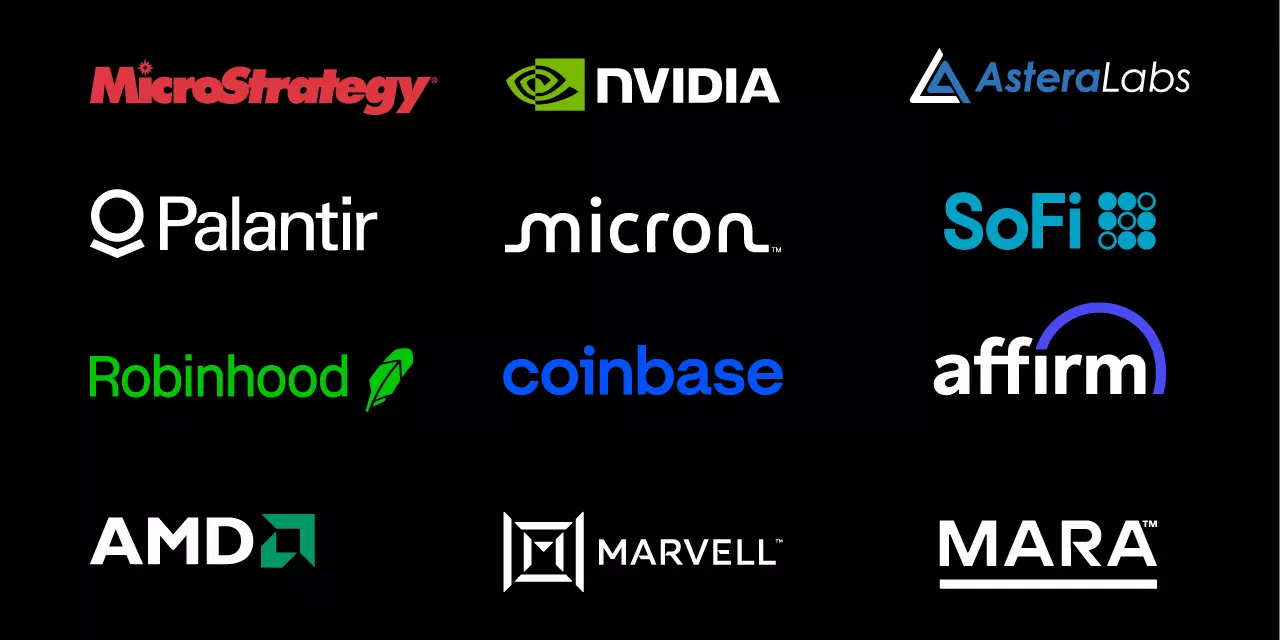
Why crypto stocks outpace tokens
Investing in crypto stocks offers a distinct structural advantage over holding digital assets directly: leverage and regulatory safety. While owning Bitcoin or Ethereum requires managing private keys, wallet security, and navigating volatile spot markets, equities provide exposure through established financial infrastructure. This approach allows investors to benefit from the underlying growth of blockchain technology while remaining within the protections of traditional brokerage accounts.
Equities often act as a leveraged play on crypto prices. A company like Coinbase (COIN) or MicroStrategy (MSTR) may see its stock price rise by a percentage that exceeds the daily move of the underlying asset. This amplification works in both directions, meaning the risk is significant. However, for many institutional and retail investors, the ability to trade these stocks during standard market hours without the 24/7 risk of exchange hacks or wallet loss is a compelling trade-off.
Crypto stocks offer regulatory clarity that tokens currently lack. Publicly traded companies are subject to SEC reporting requirements, audits, and corporate governance standards. This transparency reduces the counterparty risk inherent in unregulated crypto exchanges or decentralized protocols. Investors are buying a slice of a regulated business, not just a speculative digital token.
The landscape includes not only pure-play crypto miners or exchanges but also fintech giants integrating digital asset services. Companies like Klarna Group and Figure Technology are leveraging blockchain for payments and lending, offering a more diversified revenue stream than a single cryptocurrency. This diversification can cushion against the extreme volatility that characterizes the token market, making crypto stocks a more stable vehicle for long-term growth strategies in 2026.
Top crypto stock picks for Q3
Investing in crypto stocks offers a regulated pathway to digital asset exposure, but the landscape shifts rapidly with regulatory updates and market volatility. For Q3 2026, the strongest candidates combine direct cryptocurrency holdings with established revenue streams from trading platforms or mining operations. These companies provide distinct risk profiles: some act as leveraged plays on Bitcoin prices, while others generate steady income from transaction fees.
The following picks represent the most credible options based on official filings and primary market data. Each entry highlights the ticker, core business model, and specific crypto exposure to help you evaluate due diligence requirements before committing capital.
Coinbase Global (COIN)
Coinbase remains the largest U.S.-based cryptocurrency exchange, offering retail and institutional access to Bitcoin, Ethereum, and dozens of other digital assets. Its revenue model is primarily transaction-based, meaning it benefits directly from increased trading volumes and market volatility. As a publicly traded company, it provides transparency through quarterly SEC filings, allowing investors to track asset custody and revenue streams clearly. For investors seeking direct exposure to crypto adoption without managing private keys, Coinbase serves as the primary gateway.
Marathon Digital Holdings (MARA)
Marathon Digital is a leading Bitcoin mining company with one of the largest hash rate capacities in the industry. Unlike exchanges, Marathon does not hold significant fiat revenue; its income is tied directly to the price of Bitcoin and the efficiency of its mining operations. The company focuses on scaling infrastructure and improving energy efficiency to maintain profitability during market downturns. Investors in MARA are essentially making a leveraged bet on Bitcoin’s long-term price appreciation, as mining rewards are the sole source of significant revenue.
Riot Platforms (RIOT)
Riot Platforms operates large-scale mining facilities in Texas, leveraging low-cost energy sources to maximize Bitcoin production. Similar to Marathon, Riot’s performance is correlated with Bitcoin’s market price, but it also maintains a diversified approach by expanding into data center services. This dual strategy provides some revenue stability during periods of low crypto volatility. Riot’s official reports highlight its focus on operational efficiency and strategic land acquisitions, positioning it as a long-term infrastructure play in the digital asset space.
MicroStrategy (MSTR)
MicroStrategy has transformed from a business intelligence software company into a corporate Bitcoin treasury holder. The firm holds one of the largest corporate Bitcoin reserves globally, using debt instruments to acquire more digital assets. This strategy makes MSTR a high-beta proxy for Bitcoin, often moving with greater amplitude than the cryptocurrency itself. Investors should note that while the software business provides a baseline, the stock’s valuation is now heavily driven by its Bitcoin holdings and the company’s capital allocation strategy.
| Ticker | Revenue Model | Crypto Exposure |
|---|---|---|
| COIN | Transaction Fees | High |
| MARA | Mining Rewards | Direct BTC |
| RIOT | Mining & Data | Direct BTC |
| MSTR | Software & BTC | Treasury BTC |
Mining stocks vs exchange equities
Crypto equities split into two distinct operational models: mining and exchange facilitation. Mining stocks like Marathon Digital Holdings (MARA) and Riot Platforms (RIOT) are essentially energy arbitrage businesses. Their profitability hinges on the spread between the market price of Bitcoin and the cost of electricity. This makes them highly leveraged to Bitcoin’s price direction but also exposed to energy market volatility and regulatory scrutiny over power usage.
Exchange equities, primarily represented by Coinbase Global (COIN), operate as financial intermediaries. They generate revenue through transaction fees, subscription services, and custody fees. Unlike miners, their revenue is not directly tied to the spot price of Bitcoin but to trading volume and user activity. This model provides a different risk profile, often showing lower volatility than miners during bear markets, but it exposes them to heavier regulatory pressure and competition from decentralized finance protocols.
The choice between these sub-sectors depends on your exposure preference. Mining stocks offer direct, leveraged exposure to Bitcoin’s price appreciation. Exchange stocks offer exposure to the broader adoption and usage of the crypto ecosystem. Investors must verify current financial metrics through official filings, as energy costs and trading volumes fluctuate rapidly.
| Metric | Mining Stocks (e.g., MARA) | Exchange Equities (e.g., COIN) |
|---|---|---|
| Primary Revenue Driver | Bitcoin price minus energy costs | Trading fees and custody services |
| Volatility Profile | High; direct leverage to BTC price | Moderate; driven by volume and adoption |
| Key Risk Factor | Energy price spikes and halving events | Regulatory changes and competition |
| Market Sensitivity | Highly correlated to Bitcoin spot price | Correlated to overall crypto market activity |
Key risks in crypto equities
Investing in crypto stocks carries a different risk profile than buying Bitcoin or Ethereum directly. While you avoid the custody headaches of private keys, you are still exposed to the extreme volatility of the underlying digital assets. When Bitcoin drops 10% in a day, the stocks of miners and exchanges often drop 20% or more. This amplified sensitivity means your portfolio can swing wildly based on short-term market sentiment rather than long-term business fundamentals.
Regulatory uncertainty remains the single largest threat to these equities. Unlike traditional financial institutions, crypto companies operate in a patchwork of rules that change frequently. A single SEC enforcement action or new legislation in the U.S. or EU can freeze operations or slash valuations overnight. Companies like Coinbase (COIN) and MicroStrategy (MSTR) are constantly navigating these legal hurdles. You must monitor official filings and regulatory announcements closely, as legal outcomes can make or break these businesses.
Operational risks are equally significant. Crypto miners face rising energy costs and hardware depreciation. Exchanges must maintain robust security to prevent hacks and thefts, which have historically wiped out trust and capital. If a major platform suffers a breach or fails to secure proper licenses, its stock can become worthless. Due diligence is not optional here; you need to verify that the company has transparent audits, strong security protocols, and a clear path to profitability independent of crypto price spikes.
How to buy crypto stocks safely
Buying crypto stocks requires the same diligence as purchasing the underlying digital assets. You are not just betting on a token; you are buying equity in a company that may operate in highly regulated environments. To execute this safely, start by selecting a reputable broker that offers direct access to the stock exchanges where these companies are listed, such as the NYSE or Nasdaq. Avoid platforms that only offer derivative contracts or CFDs unless you fully understand the leverage risks involved. For a straightforward entry point, look for established firms like Fidelity or Charles Schwab, which provide secure custody and clear reporting for your equity holdings.
Diversification is your primary defense against volatility. Do not allocate your entire portfolio to a single crypto stock. Instead, spread your exposure across different segments of the industry: mining companies like Riot Platforms (RIOT), infrastructure providers like Coinbase (COIN), and enterprise software firms like MicroStrategy (MSTR). This approach ensures that a regulatory crackdown on one segment, such as mining, does not wipe out your entire position. By balancing these holdings, you mitigate the impact of sector-specific shocks.
Finally, verify your sources. Crypto stocks are often subject to sudden news cycles and regulatory filings. Rely on official SEC filings and primary company announcements rather than social media hype. Set up price alerts and consider dollar-cost averaging to mitigate the impact of sudden market swings. By sticking to regulated brokers and a diversified selection of tickers, you protect your capital while participating in the sector's growth.



As an Amazon Associate, we may earn from qualifying purchases.
Crypto stock questions answered
Investing in crypto-related equities carries distinct risks compared to holding digital assets directly. Because these stocks are tied to traditional market structures, they remain subject to regulatory shifts, exchange solvency issues, and broader macroeconomic pressures. Always verify company filings and regulatory status before allocating capital.
How do crypto stocks differ from holding Bitcoin?
Crypto stocks represent ownership in companies that mine, exchange, or provide infrastructure for digital assets. Unlike holding Bitcoin directly, these equities are traded on traditional exchanges and are influenced by corporate earnings, management decisions, and SEC regulations. This adds a layer of counterparty risk not present in direct asset ownership.
Are crypto stocks regulated by the SEC?
Companies listed on major US exchanges must comply with SEC reporting requirements. However, the regulatory environment for digital assets remains fluid. Companies involved in staking services or token issuance may face additional scrutiny. Investors should review each company’s latest 10-K filings to understand their specific regulatory exposure and compliance posture.
What are the risks of investing in crypto miners?
Mining stocks are highly sensitive to the cost of energy and the difficulty of the blockchain network. A drop in crypto prices or an increase in operational costs can severely impact profitability. Additionally, miners face obsolescence risks as hardware becomes less efficient. Due diligence should include an analysis of their hash rate efficiency and energy contracts.
Can crypto stocks offer dividends?
Most crypto companies reinvest profits into expansion or technology upgrades rather than paying dividends. A few established exchanges or infrastructure providers may offer dividends, but this is rare. Investors seeking income should verify dividend history and payout ratios, as these are not typical features of high-growth crypto equities.
No comments yet. Be the first to share your thoughts!