
Why AI bots matter in 2026
The 2026 crypto market does not sleep, and it does not forgive hesitation. Volatility has intensified, with price swings occurring in minutes rather than days. In this environment, manual trading is no longer a competitive advantage; it is a liability. The speed of modern markets requires execution speeds that human reflexes simply cannot match.
AI trading bots address this gap by operating continuously, monitoring hundreds of indicators simultaneously. They remove emotional decision-making, which is often the primary cause of capital erosion during high-stakes volatility. Platforms like 3Commas and Pionex allow traders to deploy strategies that react instantly to market shifts, preserving capital when manual intervention would be too slow.
Warning: AI bots execute faster than humans but amplify losses if parameters are wrong.
The choice of bot is not about finding a "magic bullet" but about selecting the right infrastructure for your risk tolerance. Whether you need the fully managed quant strategies of BulkQuant or the customizable strategy control of Coinrule, the goal remains the same: consistency in chaos. Understanding these tools is the first step toward surviving the 2026 landscape.


As an Amazon Associate, we may earn from qualifying purchases.
5 AI Crypto Trading Bots for 2026: A High-Stakes Review
Navigating the 2026 crypto landscape requires more than just capital; it demands precision algorithms that can withstand extreme volatility without eroding your principal. We evaluate five specific AI trading bots—focusing on concrete features from their official documentation—to help you identify which tool prioritizes capital preservation in this high-stakes environment.
-
Pionex 16 Built-in Trading Bots
Pionex integrates sixteen specialized trading bots directly into its exchange infrastructure, eliminating the need for external API connections that often introduce latency or security vulnerabilities. This all-in-one approach lowers the barrier to entry for grid trading and arbitrage strategies. However, users must trust Pionex with custody of their funds, creating a centralization risk that contrasts with the decentralized ethos of crypto. Capital preservation here relies on the platform’s robust security audits and the simplicity of its preset configurations. -
3Commas Smart Trade Terminal
3Commas functions as a sophisticated command center, aggregating multiple exchange accounts into a unified dashboard for precise trade execution. Its Smart Trade feature offers advanced take-profit and stop-loss layers, crucial for managing downside risk in volatile markets. While it does not host funds, the reliance on API keys requires strict security hygiene. Traders seeking granular control over position sizing and leverage will find its interface powerful, though the learning curve demands a disciplined approach to avoid over-leveraging during high-stakes volatility. -
Cryptohopper Cloud-Based Strategy Builder
Cryptohopper operates entirely in the cloud, ensuring strategies run 24/7 without requiring local hardware or constant monitoring. Its Strategy Builder allows users to design custom algorithms using a drag-and-drop interface, blending technical indicators with sentiment analysis. This flexibility is a double-edged sword; poorly coded logic can lead to rapid capital erosion. The platform’s marketplace offers pre-built strategies, but verifying their historical performance against current market conditions is essential to prevent reliance on outdated backtests that fail in live trading environments. -
Bitsgap Grid Trading Bot
Bitsgap specializes in grid trading, a strategy that profits from market volatility by buying low and selling high within a defined price range. Its unique Arbitrage Bot scans multiple exchanges for price discrepancies, offering a hedge against single-exchange failure risks. While effective in sideways markets, grid bots can suffer significant drawdowns during strong trending moves if the price exits the grid range. Users must carefully set grid boundaries to balance profit potential against the risk of holding depreciating assets during sudden market crashes. -
TradeSanta Automated Trading Platform
TradeSanta provides a straightforward, user-friendly interface for setting up automated trading bots with minimal technical knowledge. It supports a variety of strategies, including DCA and grid trading, making it accessible for beginners who may lack coding skills. However, its simplicity can be a limitation for advanced traders needing complex conditional logic. The platform’s cloud-based nature ensures uptime, but users must remain vigilant about API security and regularly review bot performance to ensure it aligns with their risk tolerance and capital preservation goals.
How to choose the right AI crypto trading bot
Selecting an AI trading bot is less about finding the highest potential return and more about preventing total capital loss. Most bots fail not because the algorithm is flawed, but because the user misconfigured risk parameters or connected an insecure API key. You must align the bot’s technical requirements with your actual skill level and risk tolerance.
If you cannot read JSON or manage API endpoints, avoid open-source bots like Hummingbot or Freqtrade. Stick to SaaS platforms with graphical interfaces. The convenience of a dashboard comes with monthly fees, but it removes the risk of breaking the code during a market crash.
Never grant your bot withdrawal permissions. Use read-only API keys with trading permissions only. Ensure the bot supports your specific exchange’s API version. Look for platforms that encrypt API keys and offer two-factor authentication (2FA) for the bot dashboard itself, as outlined in industry security standards.

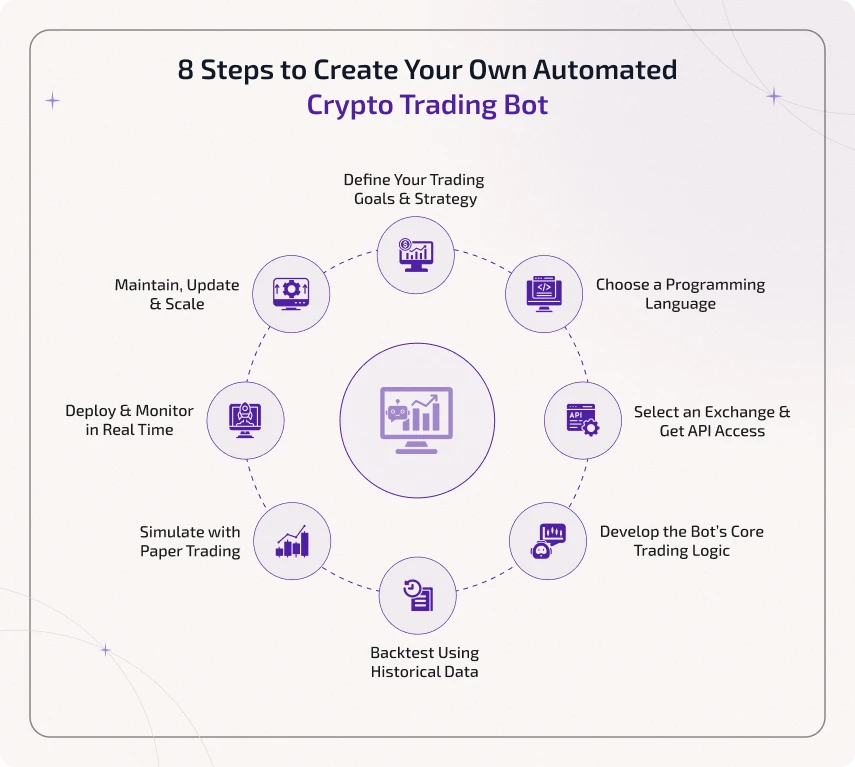
Before deploying real capital, run a backtest on the last six months of volatile data. Then, use a paper trading account. Set a hard stop-loss that limits any single trade to 1-2% of your total portfolio. If the bot cannot demonstrate risk management in a simulation, it will fail in live markets.


As an Amazon Associate, we may earn from qualifying purchases.
The goal is not to automate wealth generation overnight, but to automate discipline. A bot that executes a flawed strategy faster than you can is simply a faster way to lose money. Prioritize security and risk controls over fancy AI features.
Security and Market Risks
Trading bots operate on autopilot, which means technical glitches or market shocks can drain accounts in minutes. Your capital is only as safe as the permissions you grant. Always configure your API keys with read and trade access only. Never enable withdrawal permissions, as this leaves your funds exposed to exchange hacks or bot vulnerabilities.
Algorithmic failure is the second major risk. Bots rely on historical data and predefined logic. When volatility spikes or liquidity dries up, these strategies can fail catastrophically. Look for platforms that offer two-factor authentication (2FA) and encrypted API storage. Reputable providers like CoinAPI emphasize audit trails and clear error handling to mitigate these dangers.


As an Amazon Associate, we may earn from qualifying purchases.
Frequently asked: what to check next


As an Amazon Associate, we may earn from qualifying purchases.
No comments yet. Be the first to share your thoughts!