
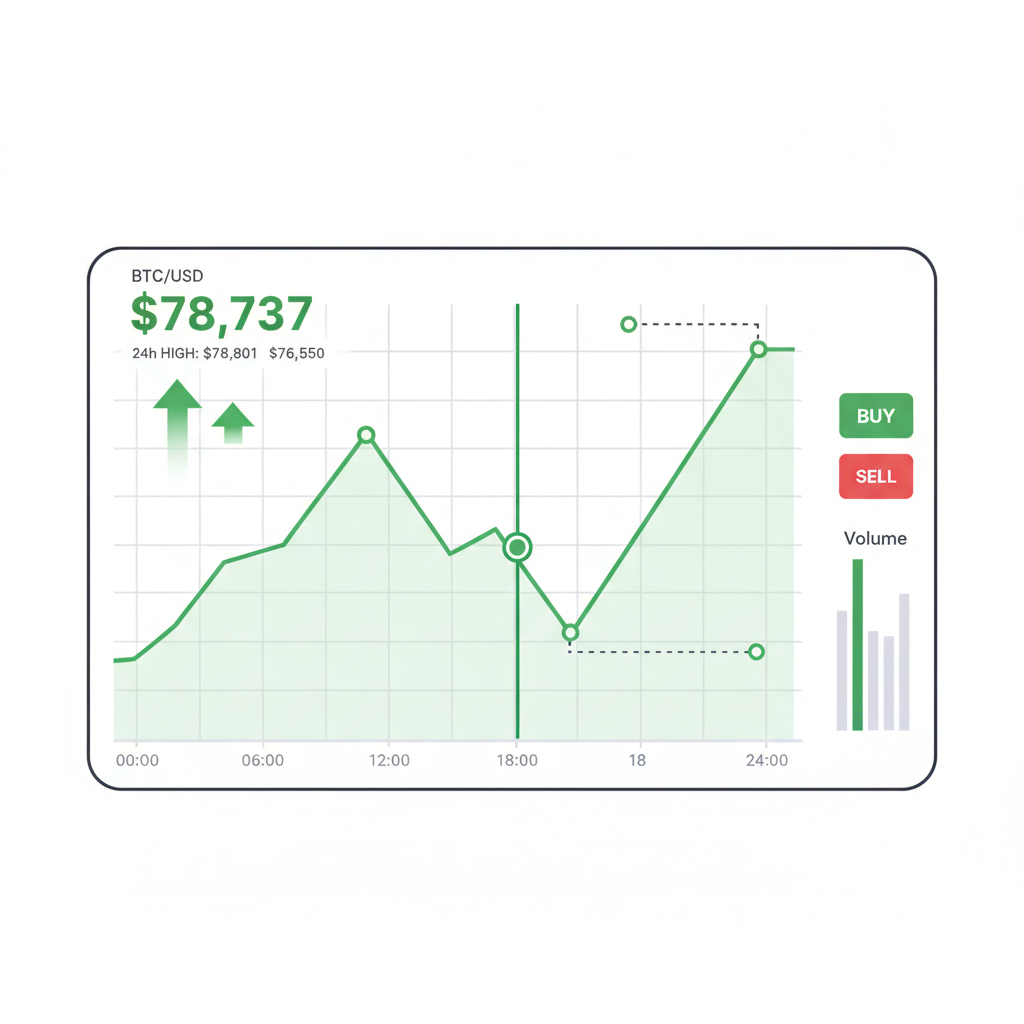
As Bitcoin holds steady at $78,737.00 amid a 3.34% 24-hour gain, the crypto market in early 2026 remains a battlefield of opportunity and peril. Just days ago, on February 1, a staggering $2.2 billion in liquidations rocked perpetual futures traders, with Ethereum liquidations alone hitting $961 million and Bitcoin at $679 million. This event underscores a timeless truth in trading: leverage can multiply wins, but mishandled, it erases accounts overnight. In this guide to crypto perpetual futures trading, we’ll dissect how to wield leverage responsibly, drawing from macroeconomic shifts and hard-learned market lessons.
Decoding Perpetual Futures: No Expiration, Endless Volatility
Perpetual futures, or perps, dominate crypto perpetual futures trading because they mimic spot prices without expiry dates. Unlike traditional futures, perps use a funding rate mechanism to keep contracts aligned with underlying assets like BTC or ETH. In today’s market, where BTC swings between $74,931 and $79,155 in a single day, this structure lets traders bet long or short indefinitely.
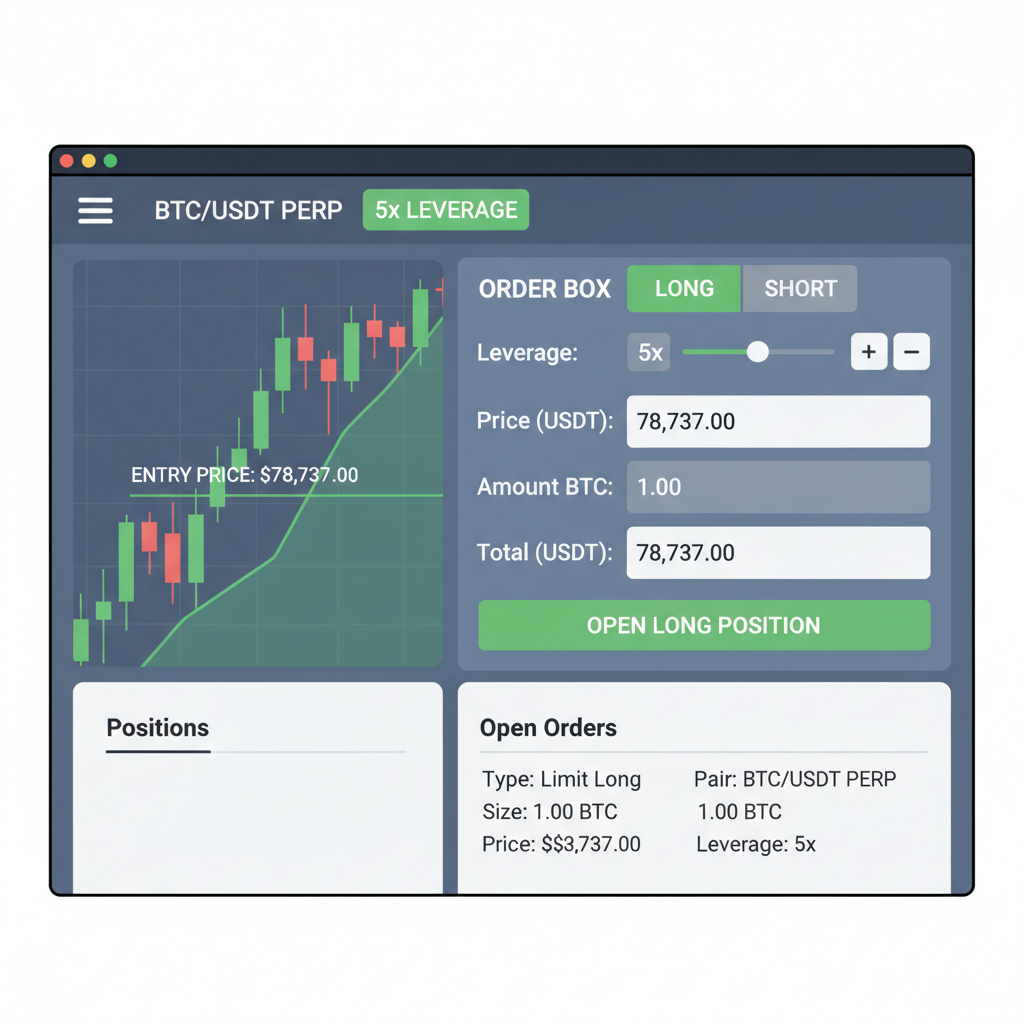
Picture opening a BTC perp position at $78,737. You’re not buying the coin outright; you’re speculating on price direction with margin as collateral. Platforms adjust funding rates periodically – positives favor shorts when markets heat up, negatives benefit longs in downturns. My 15 years in forex and commodities taught me perps thrive on volatility, but only if you respect their mechanics. Success hinges on grasping isolated versus cross margin modes: isolated limits risk to one trade, cross pools your entire balance for flexibility yet higher danger.
Leverage Mechanics: Your Double-Edged Sword in 2026
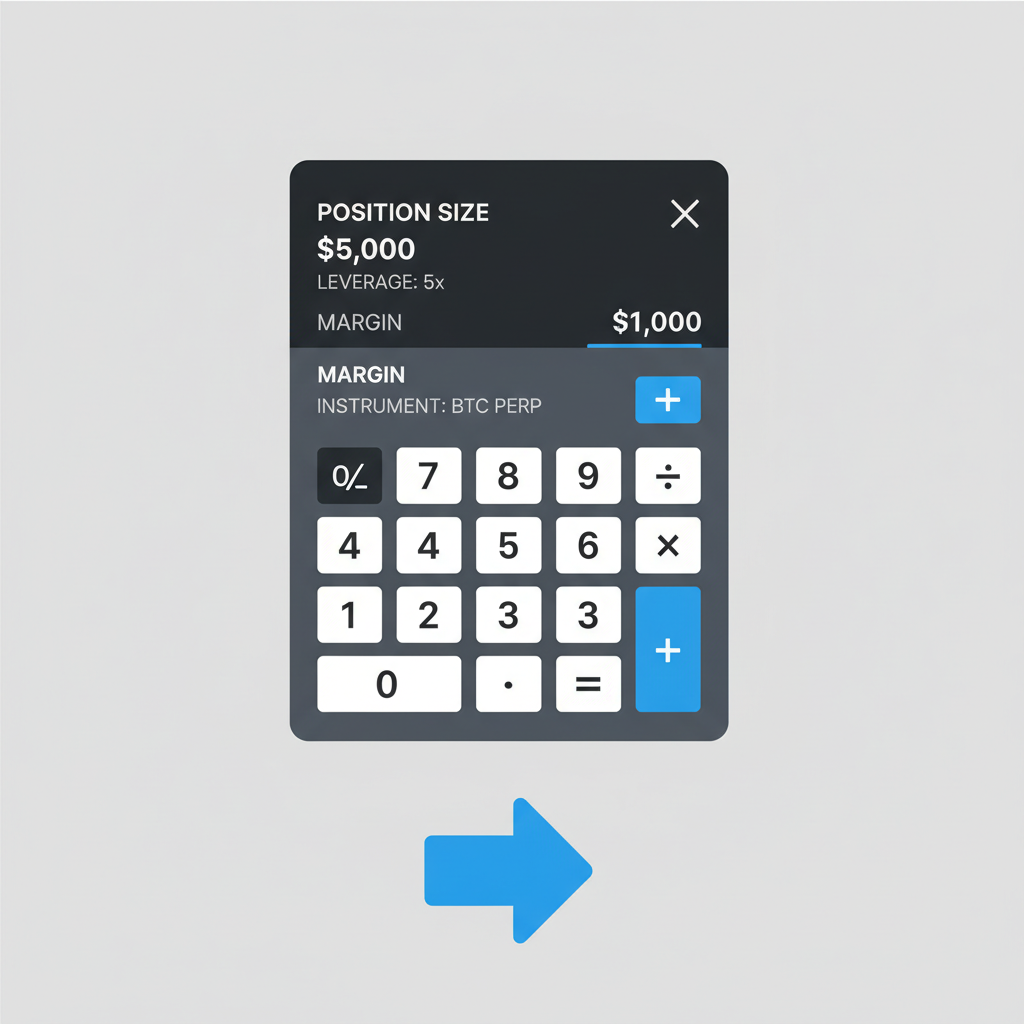
Leverage trading crypto amplifies exposure. With 10x leverage, a $1,000 margin controls $10,000 in BTC at $78,737 – roughly 0.127 BTC. A mere 10% price drop to $70,863 wipes your position if unhedged. Gains scale similarly: that same move up nets $1,000 profit.
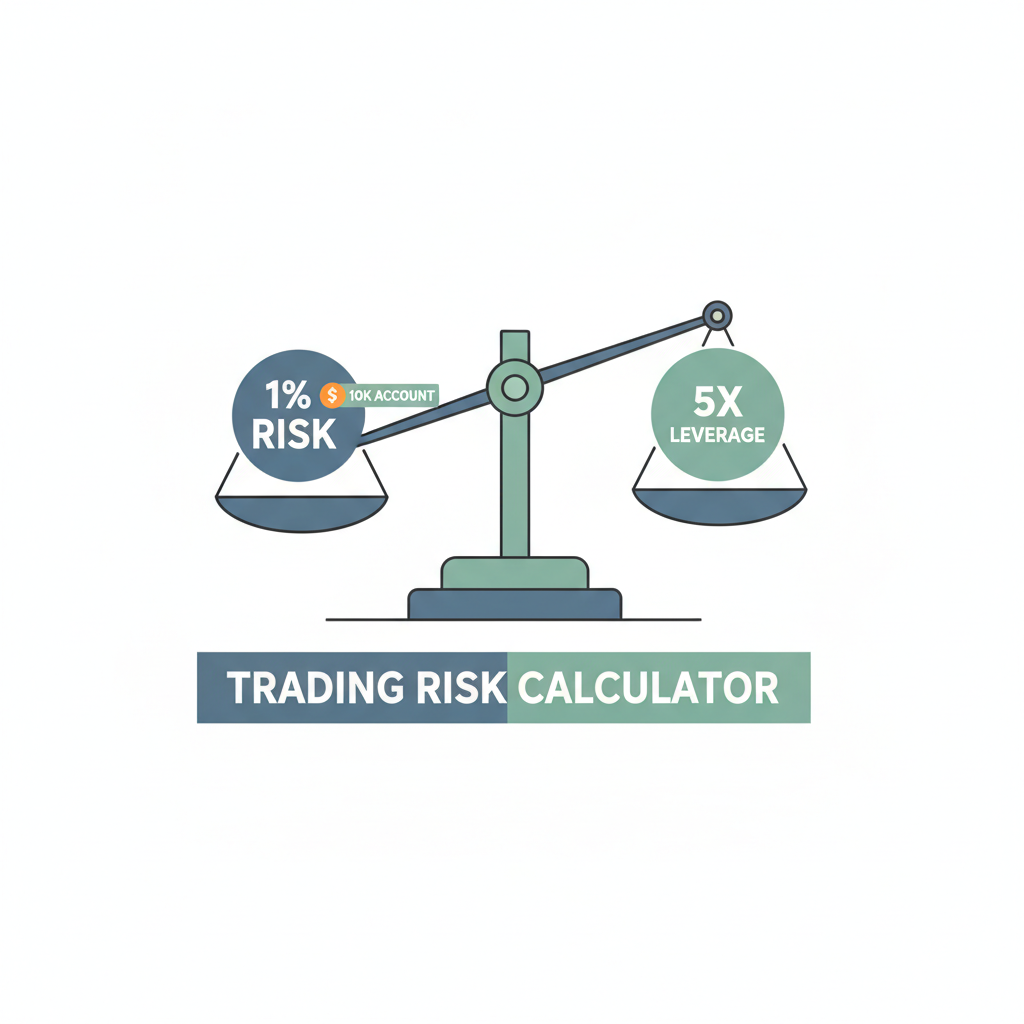
But here’s the crux – liquidation strikes when losses eat your initial margin plus maintenance requirements. Exchanges like those powering XT or MEXC set thresholds dynamically; for 10x, it might trigger at 9% adverse move. In 2026’s hyper-volatile environment, post-halving BTC rallies and ETH ETF inflows fuel wild swings. I advocate starting low: 3-5x max for novices, preserving capital above all. Calculate position size via risk per trade – never exceed 1-2% of portfolio. Formula: Position Size = (Account Risk/Stop Loss Distance) x Leverage Adjustment.

Funding rates add another layer. Positive rates, common in bull runs like now, charge longs to shorts every 8 hours. Ignore them, and costs erode edges in swing trades.
Avoiding the Liquidation Abyss: Core Risk Shields
The February 1 cascade liquidated longs as BTC dipped to $74,931, exposing overleveraged bets. Ethereum’s $961 million wipeout stemmed from clustered stops below key supports. To sidestep this in perp trading strategies 2026, prioritize margin buffers – aim for 2-3x the maintenance margin. If your exchange demands 0.5% maintenance on 10x, deposit enough for 1.5% wiggle room.
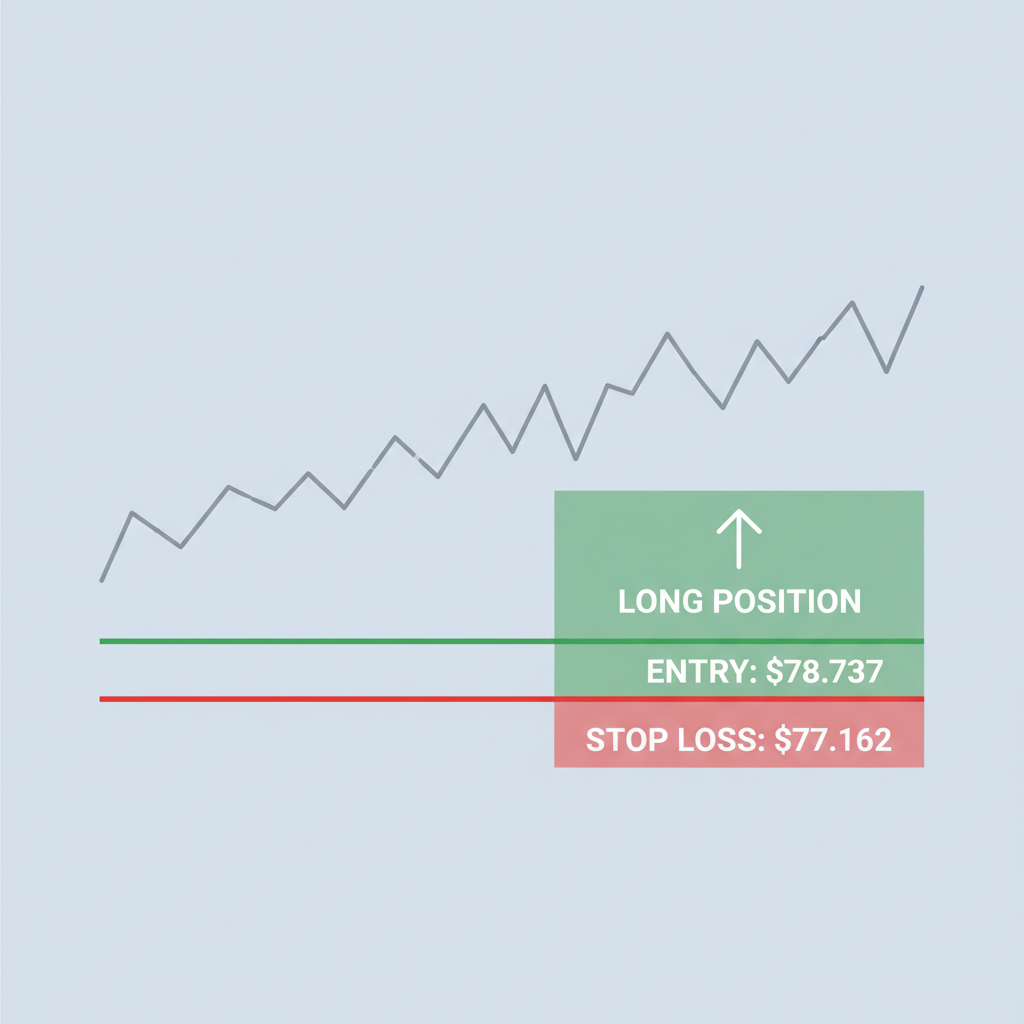
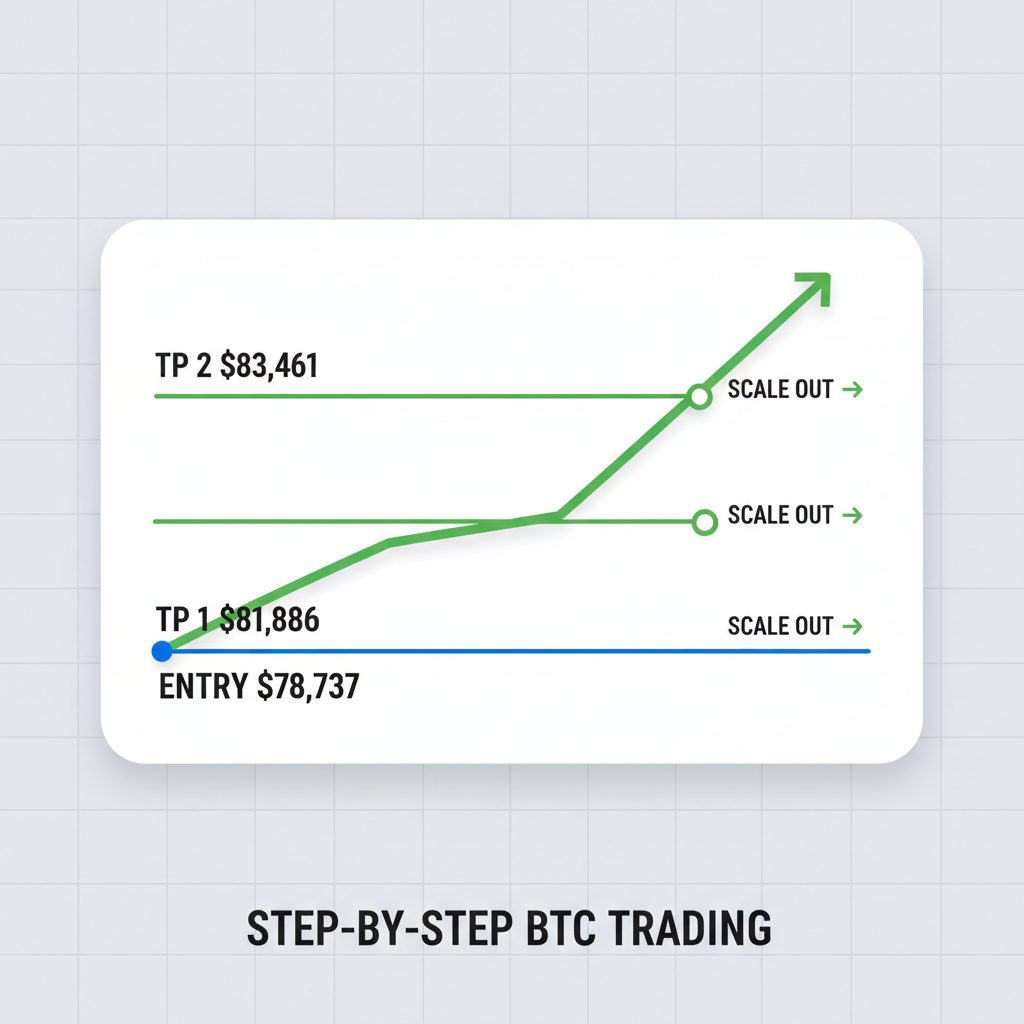
Stop-loss orders are non-negotiable. Place them beyond noise: for BTC at $78,737, a swing trader might set at $76,000, risking 3.4%. Pair with take-profits at 1: 2 risk-reward. Position sizing enforces discipline; a $50,000 account risks $500 max per trade, dictating leverage and entry.
Bitcoin (BTC) Price Prediction 2027-2032
Long-term forecasts post-$2.2B liquidation event in 2026, with bullish/bearish scenarios for responsible perpetual futures trading
| Year | Minimum Price | Average Price | Maximum Price | Avg YoY % Change |
|---|---|---|---|---|
| 2027 | $65,000 | $95,000 | $140,000 | +19% |
| 2028 | $80,000 | $130,000 | $200,000 | +37% |
| 2029 | $110,000 | $180,000 | $300,000 | +38% |
| 2030 | $140,000 | $240,000 | $400,000 | +33% |
| 2031 | $180,000 | $320,000 | $550,000 | +33% |
| 2032 | $220,000 | $420,000 | $700,000 | +31% |
Price Prediction Summary
Bitcoin is projected to recover from early 2026 volatility and $78,737 baseline, with average prices climbing to $420,000 by 2032. Minimums reflect bearish risks like regulation and corrections; maximums capture bullish halving-driven rallies and adoption. Emphasizes low-leverage strategies to avoid liquidation.
Key Factors Affecting Bitcoin Price
- 2028 Bitcoin halving boosting scarcity
- Institutional ETF inflows and futures adoption
- Regulatory clarity reducing bearish pressures
- Scalability improvements (e.g., Lightning Network)
- Macro factors: inflation hedging amid rate cuts
- Post-liquidation risk management in perps
- Altcoin competition and market dominance
Disclaimer: Cryptocurrency price predictions are speculative and based on current market analysis.
Actual prices may vary significantly due to market volatility, regulatory changes, and other factors.
Always do your own research before making investment decisions.
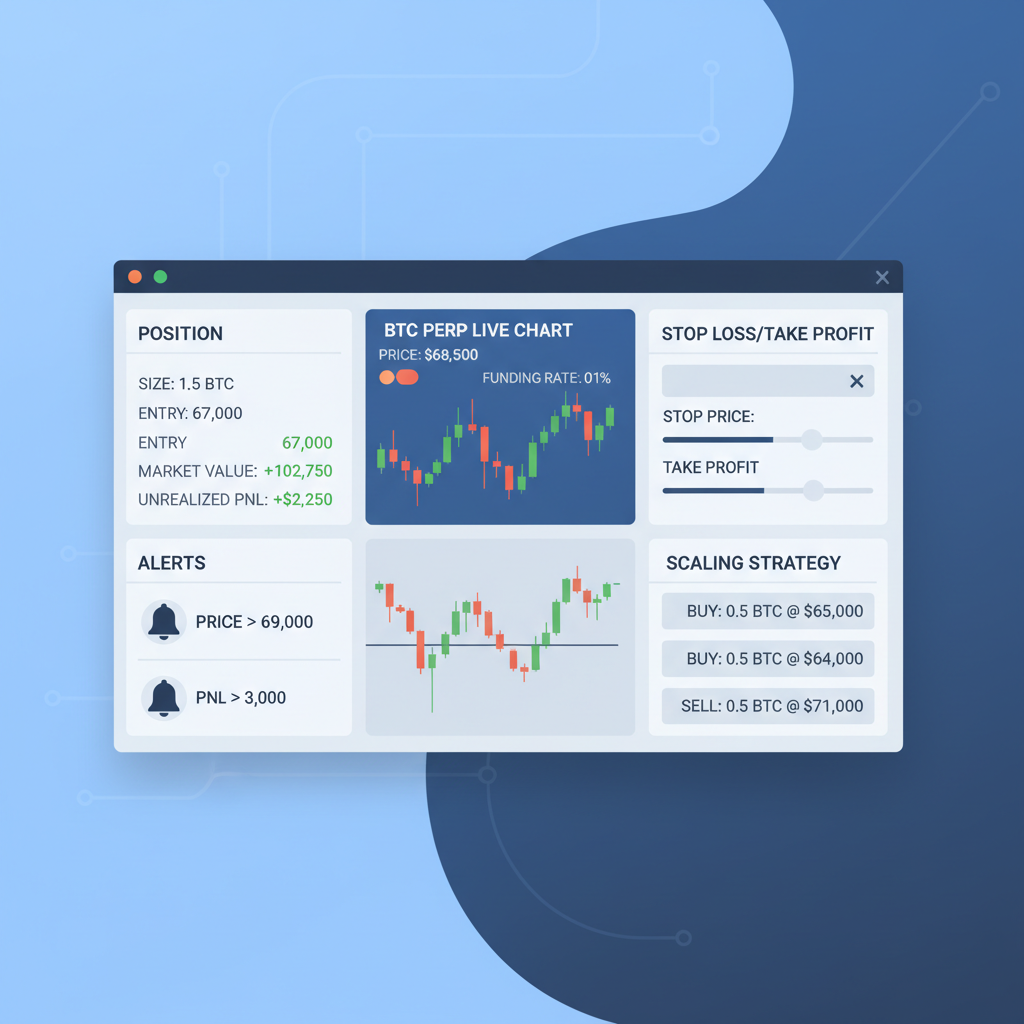
Monitor unrealized PnL hourly in volatile sessions. Scale in gradually – half position first, add on confirmation. These steps transform leverage from gambler’s crutch to precision tool, aligning with my mantra: preserve capital, let profits run.
Overleveraged positions crumble under pressure, as seen in the recent $2.2 billion liquidation wave. Seasoned traders know that crypto leverage risks demand proactive hedges like dynamic position adjustments. If BTC at $78,737.00 faces resistance near $79,155, trim longs preemptively rather than clinging to hope. This measured approach separates survivors from statistics.
Perp Trading Strategies 2026: Tailored for Volatility
In 2026, perp trading strategies 2026 evolve with market maturity. Scalping suits high-frequency traders chasing micro-moves in BTC’s intraday range from $74,931 to $79,155, using 5x leverage max and tight 0.5% stops. Swing trading, my preferred method, captures multi-day trends; enter longs post-dip if ETH holds $2,340.23 support, targeting 5-10% with trailing stops.
Directional plays leverage macro cues – ETF flows buoying ETH, halving echoes lifting BTC. Arbitrage exploits funding rate discrepancies across exchanges, a low-risk no slippage crypto trading gem. For long short crypto perps, hedge portfolios: long BTC perps offset by short ETH during rotations. Avoid grid bots in chop; they bleed on whipsaws. Backtest religiously – my forex days showed 60% win rates sustain only with 1: 2 rewards.
These strategies shine when layered with psychology. Greed fueled February’s longs into overbought territory; patience rewards shorts on funding drains. Track order books for walls – thin bids below $78,737 signal downside traps.
Platform and Tool Mastery: Equipping Your Arsenal
Choose exchanges with robust APIs and low latency for leverage trading crypto guide execution. Deep liquidity minimizes slippage in perps; prioritize those handling $2.2 billion cascades without freezes. Enable isolated margin for experiments, cross for correlated plays. Tools like TradingView overlays reveal liquidation heatmaps – clusters around $76,000 screamed vulnerability last week.
Custom alerts beat manual vigilance: notify at 50% margin usage or funding spikes. Journal every trade: entry at $78,737, stop rationale, exit trigger. Review weekly refines edges; I cut drawdowns 40% this way over commodities cycles.
Mastering a Safe 5x BTC Perp Long Entry at $78,737
Mastering these elevates crypto perpetual futures trading from speculation to edge-driven craft. Post-liquidation rebounds reward the prepared; BTC’s climb from $74,931 low proves resilience.
Volatility persists – ETH at $2,340.23 eyes upgrades, BTC macroeconomic pivots. Stay nimble: reduce leverage in euphoria, add on fear. Capital preservation unlocks compounding; one preserved $10,000 outpaces ten liquidated $1,000 wins. Trade deliberately, markets reward restraint.
About the Author