

The SEC's dismissal of all charges against Justin Sun and Tron entities on March 8,2026, after Rainberry Inc. paid a $10 million civil penalty, removes a major overhang from the TRX ecosystem. This resolution, filed with prejudice to bar refiling, caps a nearly three-year saga that had dampened investor enthusiasm. TRX, now trading at $0.2851, reflects this shift with a modest 0.26% gain over the past 24 hours, holding steady between a high of $0.2867 and low of $0.2835. As a portfolio manager focused on sustainable growth, I see this as a catalyst for renewed momentum in both TRX and the burgeoning real-world asset (RWA) tokenization sector on Tron-compatible chains.
RWA tokenization has surged past $30 billion in total value locked during 2025, fueled by tokenized private credit, U. S. Treasuries, and real estate. Projections from analysts point to a market size between $3.5 trillion and $30 trillion by 2030, with blockchains like Tron positioned for gains due to low fees and scalability. Tron's treasury expansion to over 681.2 million TRX underscores internal confidence in its utility for on-chain finance. For 2026 traders, this regulatory green light pairs perfectly with RWA standardization, enabling strategies that blend TRX momentum with tokenized asset yields.
TRX Momentum Builds on Cleared Regulatory Horizon
With the SEC case behind it, TRX sentiment has tilted bullish. The token's consolidation near $0.28 signals potential for breakouts, especially as RWA volumes on efficient chains like Tron rise. Platforms bridging Solana and Tron amplify liquidity, making TRX a gateway for RWA exposure. In my experience blending fundamentals with technicals, this setup favors proactive positioning over passive holding. Tron's deliberate accumulation strategy mirrors what savvy investors should emulate: buy strength amid clarity.
Tron (TRX) Price Prediction 2027-2032
Post-SEC Settlement and RWA Tokenization Growth Outlook
| Year | Minimum Price | Average Price | Maximum Price | YoY % Change (Avg from Prev Year) |
|---|---|---|---|---|
| 2027 | $0.32 | $0.52 | $0.85 | +30% (from 2026 est. $0.40) |
| 2028 | $0.48 | $0.70 | $1.15 | +35% |
| 2029 | $0.65 | $0.95 | $1.65 | +36% |
| 2030 | $0.90 | $1.35 | $2.35 | +42% |
| 2031 | $1.15 | $1.95 | $3.25 | +44% |
| 2032 | $1.50 | $2.80 | $4.80 | +44% |
Price Prediction Summary
Post-SEC settlement resolution boosts TRX sentiment, with RWA tokenization and ecosystem expansion driving growth. Projections indicate progressive appreciation from $0.52 avg in 2027 to $2.80 in 2032, factoring in market cycles, regulatory tailwinds, and competition. Bullish max scenarios reach $4.80 by 2032 amid $2T+ RWA market.
Key Factors Affecting Tron Price
- SEC case closure enhancing investor confidence
- RWA tokenization surge to $3.5T-$30T by 2030
- Tron treasury accumulation (681M+ TRX)
- DeFi/stablecoin adoption and scalability improvements
- Market cycles with potential 2028 bear dip
- Competition from Solana/Ethereum in RWA space
Disclaimer: Cryptocurrency price predictions are speculative and based on current market analysis. Actual prices may vary significantly due to market volatility, regulatory changes, and other factors. Always do your own research before making investment decisions.
Experts forecast RWAs evolving from pilots to standardized products, with fractionalization lowering barriers and boosting liquidity. NYSE's planned 24/7 tokenized stock exchange further validates the trend. For TRX holders, this means enhanced utility as RWA inflows leverage Tron's speed and cost advantages over pricier networks.
Strategy 1: Post-Settlement TRX Momentum Breakout
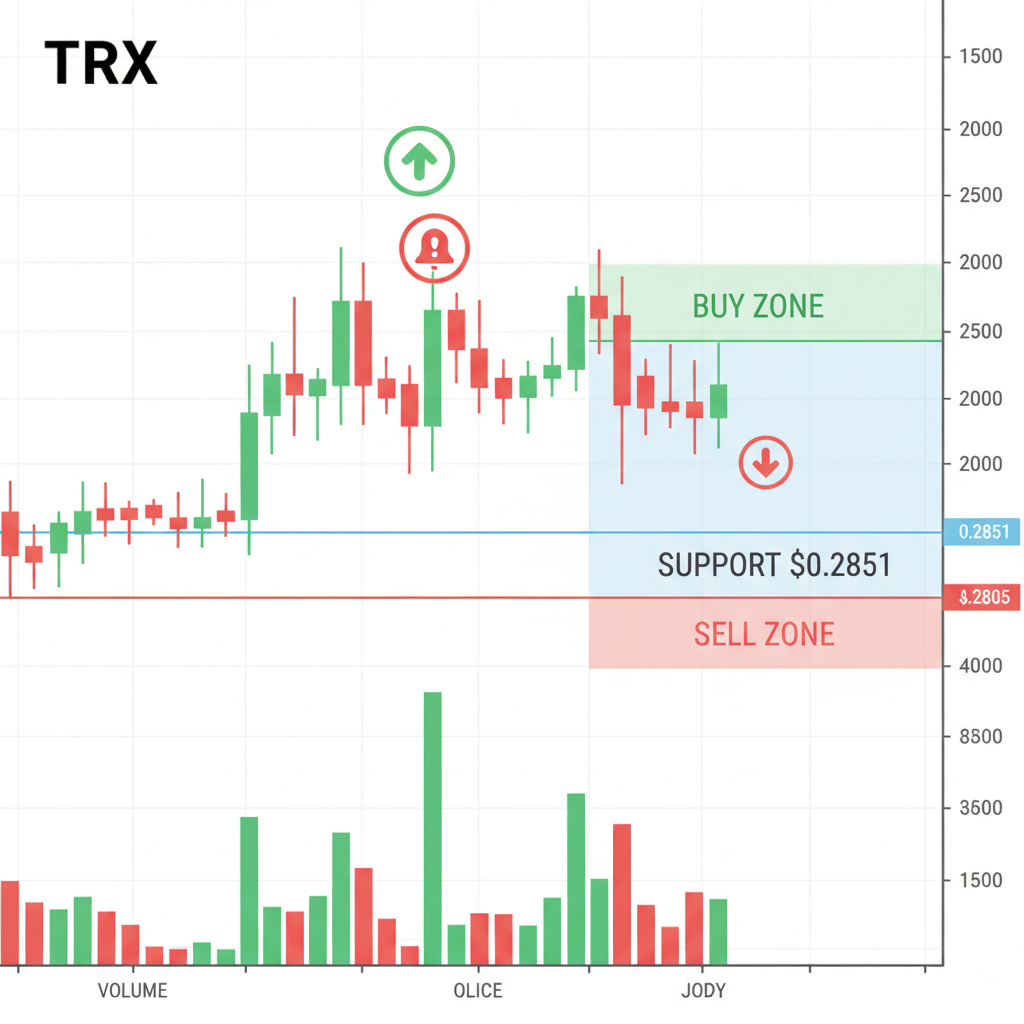
The first prioritized approach capitalizes directly on this uplift: "Post-Settlement TRX Momentum Breakout: Enter long above $0.18 resistance targeting $0.25 with 8% trailing stop-loss". Though TRX has surpassed these levels at its current $0.2851 perch, the principle endures for pullback entries or scaled extensions. Watch for retests of prior resistance now flipped to support around $0.28. A trailing stop at 8% protects gains while allowing room for volatility typical post-relief rallies. I've deployed similar setups in equity breakouts; here, pair with volume confirmation on Tronscan for conviction. Risk no more than 2% of capital per trade to preserve portfolio resilience.
Integrating RWA Diversification with TRX Core
Next, balance momentum with stability via "RWA Token Diversification on Tron: Allocate 30% portfolio to ONDO and MKR equivalents on Tron for yield and liquidity post-regulatory clarity". ONDO's tokenized Treasuries and MKR-like overcollateralized positions thrive on Tron's infrastructure, offering 5-10% yields with fractional access to illiquid assets. At TRX's $0.2851 level, dedicate 30% to these for income streams that offset crypto drawdowns. Regulatory clarity minimizes custodian risks, enhancing appeal. This allocation aligns with McKinsey's $2 trillion RWA forecast by 2030, positioning portfolios for tokenized commodities like PAXG as inflation hedges.
Early 2026 data shows RWA platforms on Solana and Ethereum leading, but Tron's low fees position it for arbitrage as volumes swell. Diversification here isn't dilution; it's strategic layering for compounded returns.
Dollar-Cost Averaging TRX Amid Projected Upside
Building on core holdings, employ "Dollar-Cost Averaging TRX into 2026: Weekly buys during dips below 50-day MA amid projected 50% TRX upside from SEC relief". With TRX at $0.2851, the 50-day moving average serves as a dynamic entry zone during consolidations. Weekly investments smooth volatility, capturing the anticipated 50% climb to around $0.43. This methodical tactic suits long-term builders, averaging costs while regulatory tailwinds propel fundamentals. In my portfolios, DCA has outperformed lump sums in sideways markets, proving its worth for TRX's utility-driven ascent.
Traders adept at on-chain metrics can exploit inefficiencies as RWA adoption accelerates. Tron's fee structure- often under $0.01 per transaction- shines here, enabling rapid executions that costlier chains can't match. With TRX at $0.2851, monitor RWA inflows via Dune Analytics; surges signal prime arbitrage windows.
Strategy 4: On-Chain Volume Arbitrage Between TRX and RWA
Precision timing defines this edge: "On-Chain Volume Arbitrage Between TRX and RWA: Trade spreads using Tron's low fees when RWA volumes surge 20% and post-case closure". Post-SEC relief, expect RWA protocols on Tron to see volume spikes as capital rotates from Ethereum. Buy TRX dips during surges, sell into RWA pairs like ONDO/TRX when spreads widen 5-10%. I've profited from similar cross-asset arb in equity ETFs; here, Tron's USDT dominance- holding billions in circulation- provides deep liquidity. Set alerts for 20% volume thresholds on Tronscan, entering with 1: 3 risk-reward ratios. This isn't gambling; it's harvesting inefficiencies born from regulatory thaw.
5 TRX/RWA Trading Strategies for 2026 (TRX Current Price: $0.2851)
| Strategy | Entry Trigger | Target | Risk Level |
|---|---|---|---|
| Post-Settlement TRX Momentum Breakout | Enter long above $0.2867 (24h high) | $0.40 (40% upside) | Medium 🟡 (8% trailing stop-loss) |
| RWA Token Diversification on Tron | Allocate 30% portfolio to ONDO/MKR equivalents post-regulatory clarity | Yield and liquidity gains | Low 🟢 |
| Dollar-Cost Averaging TRX into 2026 | Weekly buys during dips below $0.28 support or 50-day MA | 50% upside to $0.43 | Low 🟢 |
| On-Chain Volume Arbitrage Between TRX and RWA | When RWA volumes surge 20%+ post-case closure | Profit from spreads using Tron's low fees | Medium 🟡 |
| Hedged Staking Strategy | Stake TRX for APY while shorting perps on retracements | 5-7% APY with downside protection | Low 🟢 |
As volumes standardize per 2026 RWA predictions, this strategy scales with market maturity, turning Tron's strengths into alpha.
Hedging Volatility in a Bullish Setup
Volatility lingers even in clarity; pair yield generation with protection for resilience. Tokenized commodities and Treasuries offer ballast, but active hedges elevate portfolios amid TRX's swings around $0.2851.
Strategy 5: Hedged Staking Strategy
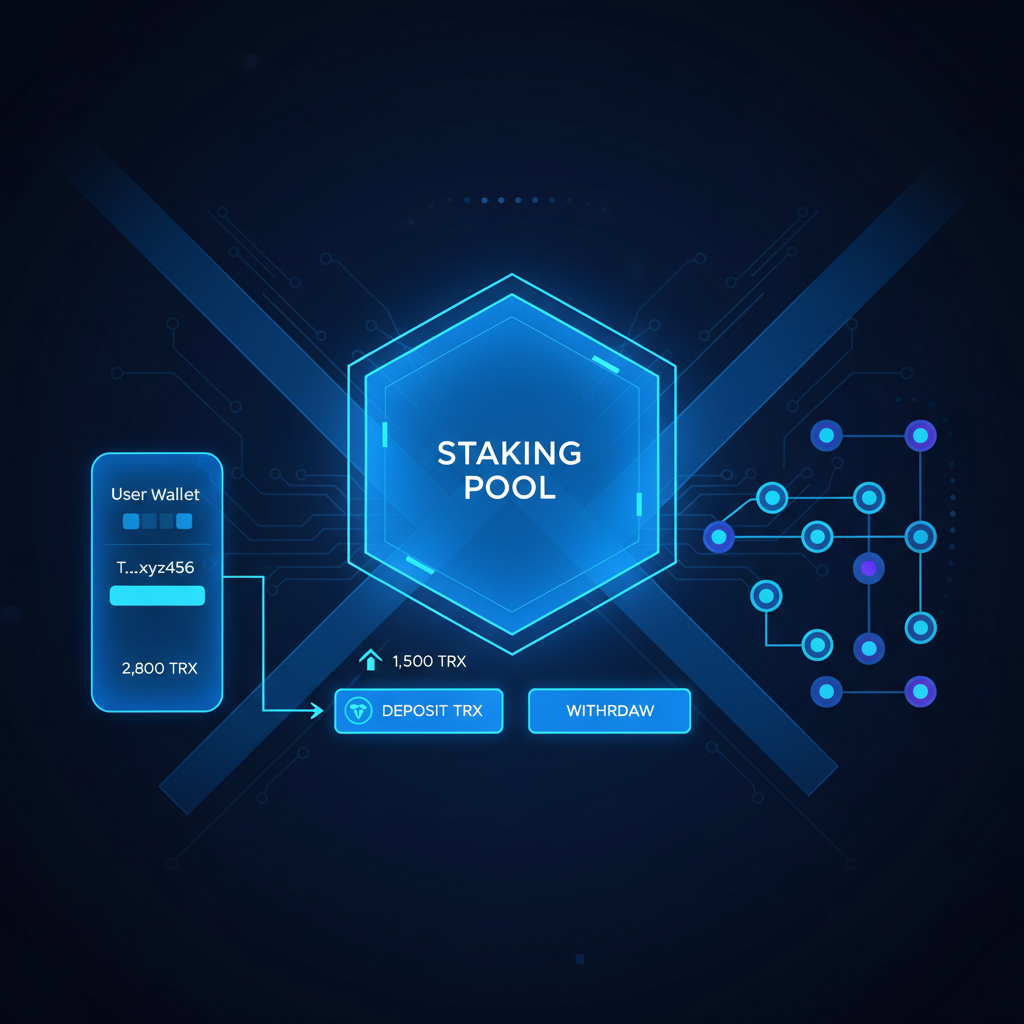
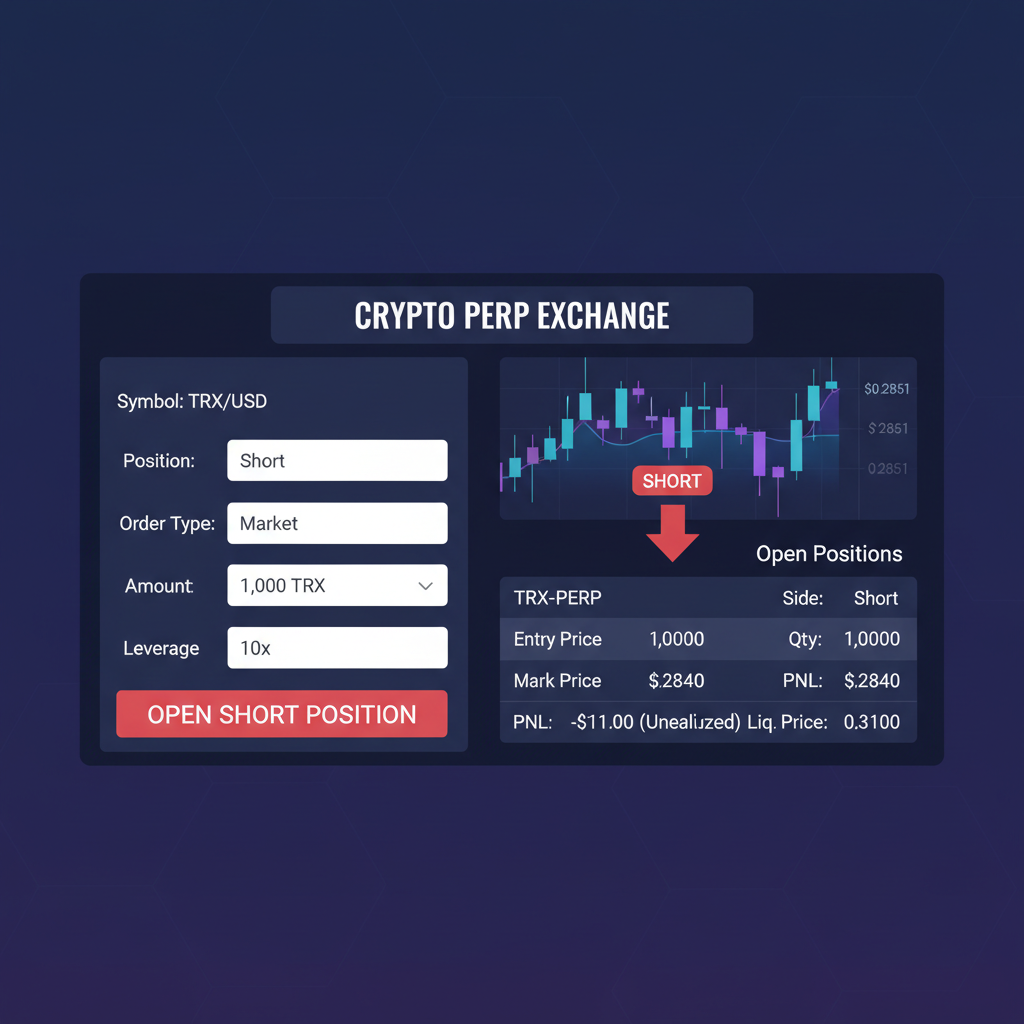
The capstone blends income and defense: "Hedged Staking Strategy: Stake TRX for 5-7% APY while shorting perps on potential retracements to manage volatility risks". Lock TRX into JustLend or SunSwap pools yielding 5-7%, then open short perpetuals on Binance or Bybit sized at 20-30% of stake. If TRX retraces from $0.2851 toward $0.28 support, shorts offset impermanent loss; rallies compound staking rewards. This neutral delta approach mirrors my equity collars, neutralizing theta decay while capturing upside. Monitor funding rates- positive perps favor shorts- and unwind at 10% portfolio drawdown thresholds. Yields fund further DCA, creating a self-reinforcing cycle.
Hedged TRX Staking Mastery: Yield + Downside Protection Post-SEC Settlement
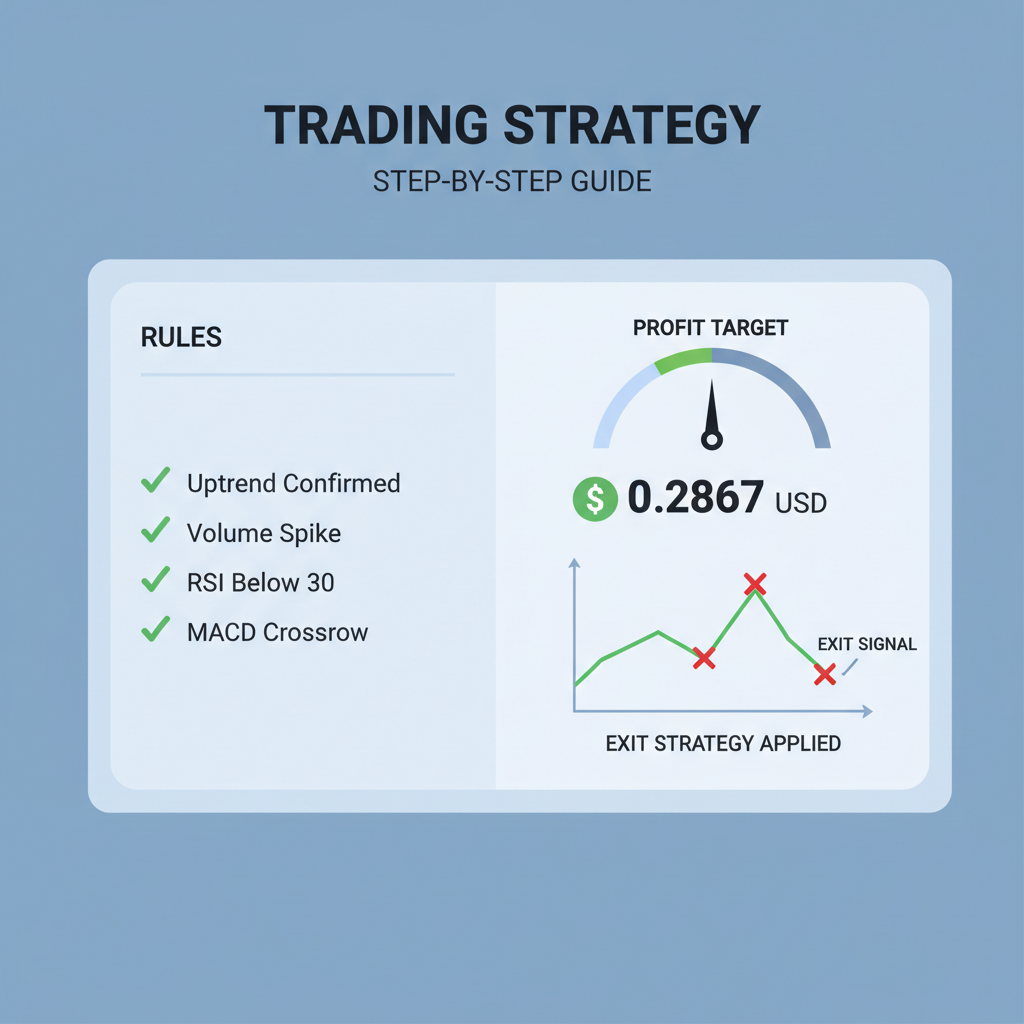
These five strategies- momentum breakout, RWA diversification, DCA, volume arbitrage, and hedged staking- form a cohesive framework for 2026. TRX's position at $0.2851, bolstered by treasury buys and RWA tailwinds, invites measured aggression. Yet success hinges on discipline: cap exposure at 10-15% per theme, rebalance quarterly, and prioritize liquidity. As RWA tokenization scales to trillions, Tron's ecosystem emerges as a low-friction hub, rewarding those who invest for tomorrow with clarity today. Blend these tactics to navigate surges and dips, building portfolios that endure crypto's rhythms.



No comments yet. Be the first to share your thoughts!